
Halloween With Your Puppy: Your Game Plan for a Calm, Safe Night

by Amy Jensen
Spooky season is here, and if you have a puppy at home, Halloween looks a whole lot different than it used to. The doorbell ringing every ten minutes, strangers in costumes on your porch, bowls of candy everywhere, decorations that light up and scream — it's a lot for a young dog to process.
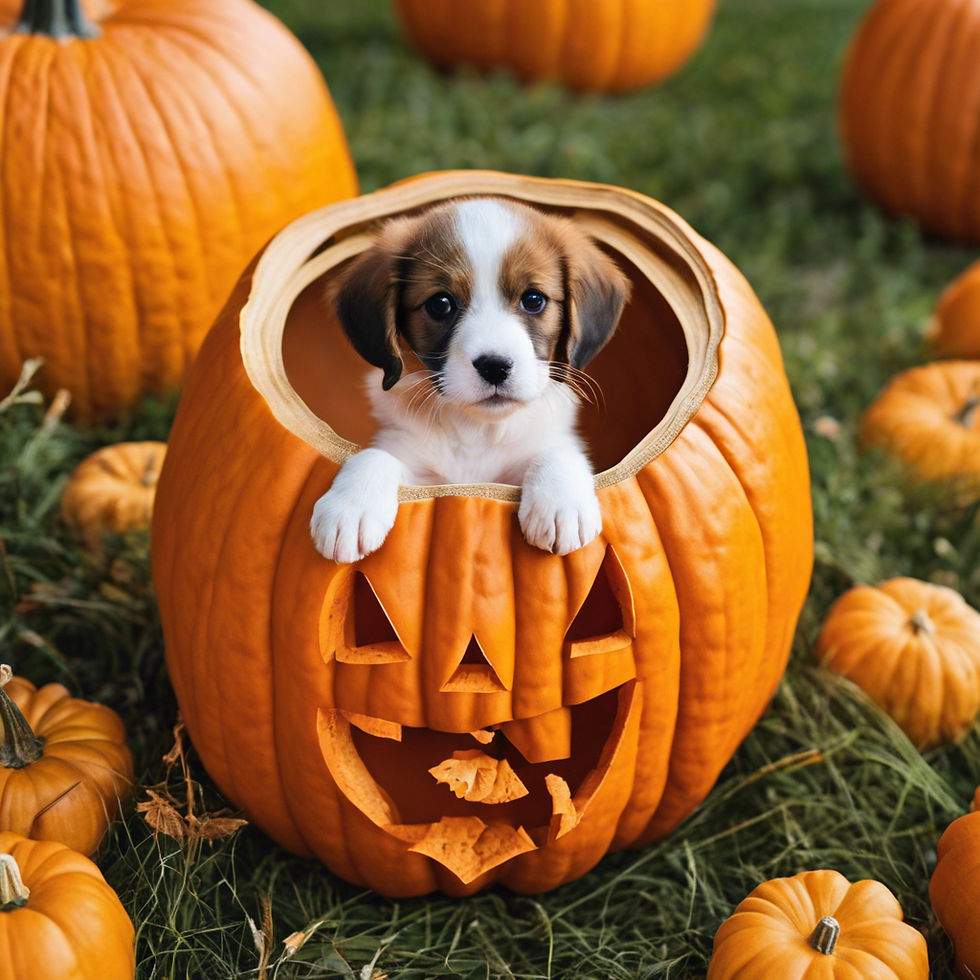
The good news? With a little planning now, Halloween can be genuinely fun for the whole family, including the four-legged members. Here's your game plan.
1. The Doorbell: Manage It, Don't Train It (That Night)
On a normal day, the doorbell ringing once or twice might get your puppy a little excited.
On Halloween night, it might ring forty or fifty times — and every ring is a surge of barking, jumping, and racing to the door. By the tenth round, your puppy is over threshold and not learning a thing.
So here's our first big piece of advice: Halloween night is not the night to train the doorbell. It's the night to manage it.
Set your puppy up in a quiet room or their pen before the trick-or-treaters arrive, with something wonderful to do — a stuffed Kong, a Toppl, a lick mat, a long-lasting chew. Put on calming music or white noise to soften the commotion. And honestly? Consider not answering the door at all. Leave a bowl of candy on the porch with a cute sign and enjoy a calm evening with your puppy instead. No rule says you have to participate in the chaos.
Want to actually work on the doorbell? You have a few weeks, and that's plenty of time. Play a doorbell sound on your phone at very low volume and toss your puppy a treat — repeat until the sound predicts good things, then gradually increase the volume. You can also practice sending your puppy to a mat or bed ("go to place") when the doorbell rings. But remember: practice happens in the weeks before Halloween, not during it.
2. Remember That Costumes on People Can Be Scary
Think about it from your puppy's perspective: the neighbor kids who usually look like kids suddenly show up wearing masks, capes, and face paint, moving in jerky, excited ways and shrieking at a higher pitch than usual. Dogs are excellent at reading human body language, and a person in a costume breaks every pattern your puppy has learned.
Don't force greetings. If kids want to pet your puppy, it's completely okay to say, "She's in training — but you can toss her a treat!" Keep your puppy behind a baby gate or at a comfortable distance, and reward calm behavior. Watch for stress signals: lip licking, yawning, turning away, a tucked tail, trying to move away. That's your puppy telling you, "This is too much." Listen, advocate, and create distance. Flooding a scared puppy with scary things doesn't build confidence — it does the opposite.
3. Should Your Puppy Wear a Costume? Only If They Vote Yes
Here's our honest answer: only dress your puppy up if they genuinely enjoy it — and most of them don't. Here's the thirty-second test: put the costume on and watch. A comfortable puppy acts like themselves — loose body, wagging tail, taking treats normally. A stressed puppy will freeze, try to rub the costume off on the furniture, scratch at it, tuck their tail, pin their ears, or refuse treats. If you see any of that, the costume comes off. No guilt required.
If your puppy is one of the rare ones who doesn't mind, keep it safe: nothing that restricts movement, breathing, vision, or potty breaks, no small parts they can chew off and swallow, and never leave a costumed dog unsupervised — not even for a minute. And a festive bandana or Halloween collar is plenty. Your puppy is already cute.
4. Candy: Know the Real Dangers
This one is serious. Chocolate contains theobromine, which is toxic to dogs — and the darker the chocolate, the more dangerous. But every family needs to know about xylitol (sometimes labeled as birch sugar), used in sugar-free candy and gum. It's extremely toxic to dogs even in very small amounts and can cause a dangerous drop in blood sugar and liver failure. Don't forget the wrappers, either — foil and plastic can cause intestinal blockages.
Make a plan before the candy enters your house: the candy bowl lives up high or behind a closed door, never on the coffee table. Make it a clear family rule: candy goes into sealed containers, and wrappers go straight into a lidded trash can. And if your puppy does get into the candy, don't wait for symptoms. Call your veterinarian or animal poison control right away, and grab the wrappers so you can say what they ate and how much. Fast action makes all the difference.
Bonus tip for the week after Halloween: sidewalks will be full of dropped wrappers. Bring high-value treats on walks and reward your puppy every time they notice litter and choose to leave it. You've just turned a hazard into a training session.
5. Give Your Decorations a Safety Check
Those jack-o'-lanterns with real candles inside? A wagging tail or curious nose plus an open flame is a burn waiting to happen — flameless LED candles look just as good. Glow sticks contain a liquid that tastes terrible and can irritate your dog's mouth and eyes, so keep them out of reach. And those motion-activated decorations that lunge or scream? They terrify plenty of adult dogs, let alone puppies. If they're in your yard, keep your puppy away — or let your puppy investigate them turned off first, at their own pace, with treats for brave behavior.
6. Should Your Puppy Go Trick-or-Treating?
For most young puppies, our answer is no. Trick-or-treating is crowds of excited kids, in the dark, with strange sights and sounds at every house, plus a lot of standing around and waiting. That's a recipe for an overstimulated, overtired puppy — and an overtired puppy is a bitey, jumpy, barky puppy. You'll spend the evening managing your dog instead of enjoying it with your family.
The exception: if your puppy is older, confident, well-socialized, and genuinely enjoys outings, one short loop can work. Bring high-value treats, reward calm behavior, watch for stress signals, and have an exit plan — the moment your puppy is done, you're done. Use a secure collar or harness with current ID tags plus something reflective or a light-up collar.
7. Plan a Decompression Day
After a big, stimulating night — even a well-managed one — give your puppy November 1st off. Take a long go-sniff walk, do some enrichment activities, and otherwise keep it boring. Think of it like the day after a big party. Rest, recharge, get back to your normal routine. And do a quick candy audit of the house — check under the couch cushions for anything the kids dropped.
Our whole philosophy is about setting dogs up for success instead of setting them up to fail, and Halloween is the perfect example. A little planning now means a calm, safe night for everyone.
Want the full walkthrough in audio form? Listen to episode #292 of the Puppy Training Podcast — Halloween With Your Puppy — wherever you get your podcasts. Happy Halloween!


Comments